Media storage is an essential feature for efficiently managing your digital assets, such as images, videos, and documents. It provides a centralized space to store, organize, and access media files, ensuring seamless integration across various tools and platforms. Understanding how media storage works allows you to maintain a well-structured library, improve collaboration, and optimize content usage. In this article, we’ll provide a comprehensive overview of media storage, including its key functionalities and best practices for managing and organizing your files effectively.
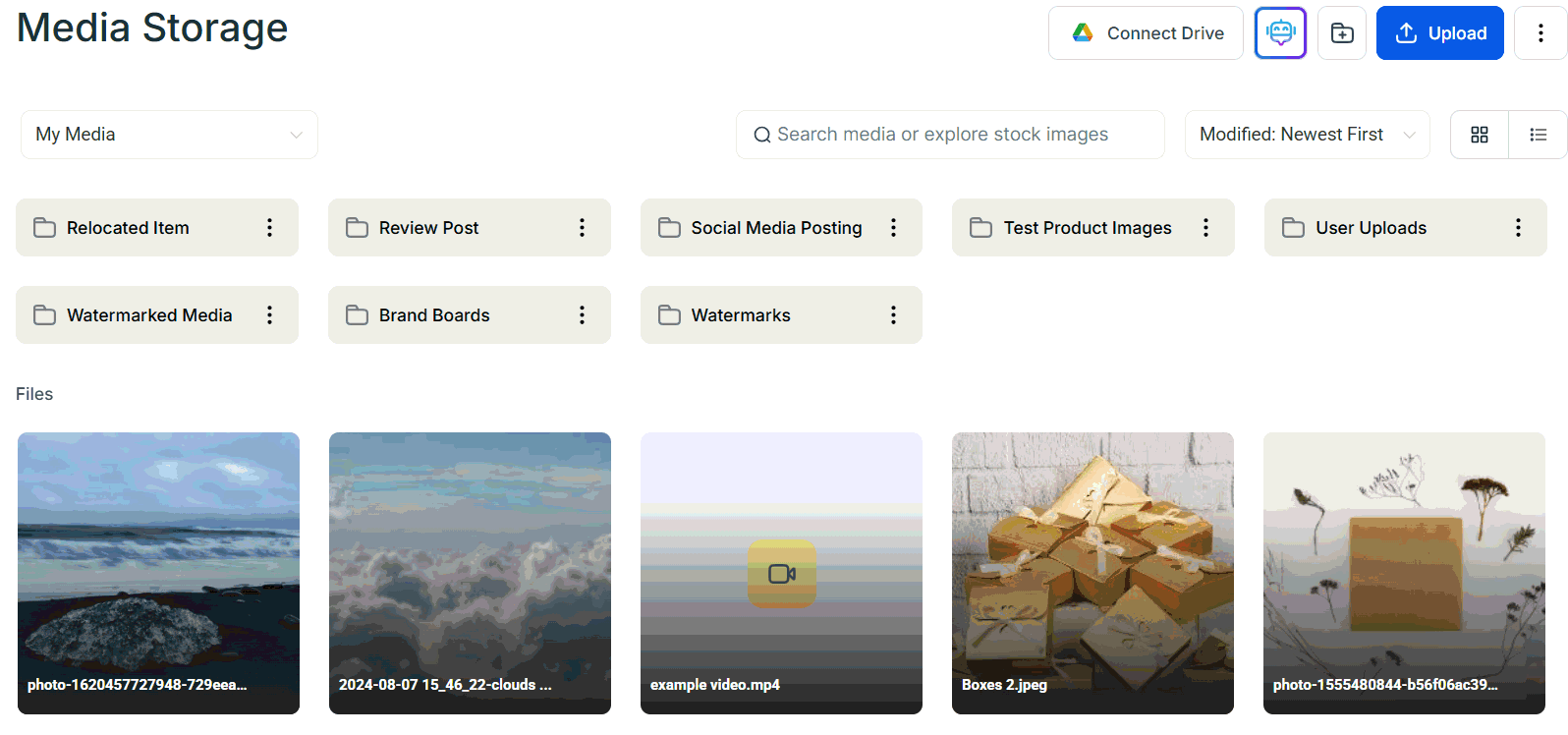
To begin utilizing this feature, first, click on the “Media Storage” button located on the left sidebar. This will open your Media Library, where you can view your uploaded content, create images using Content AI, and upload new media.
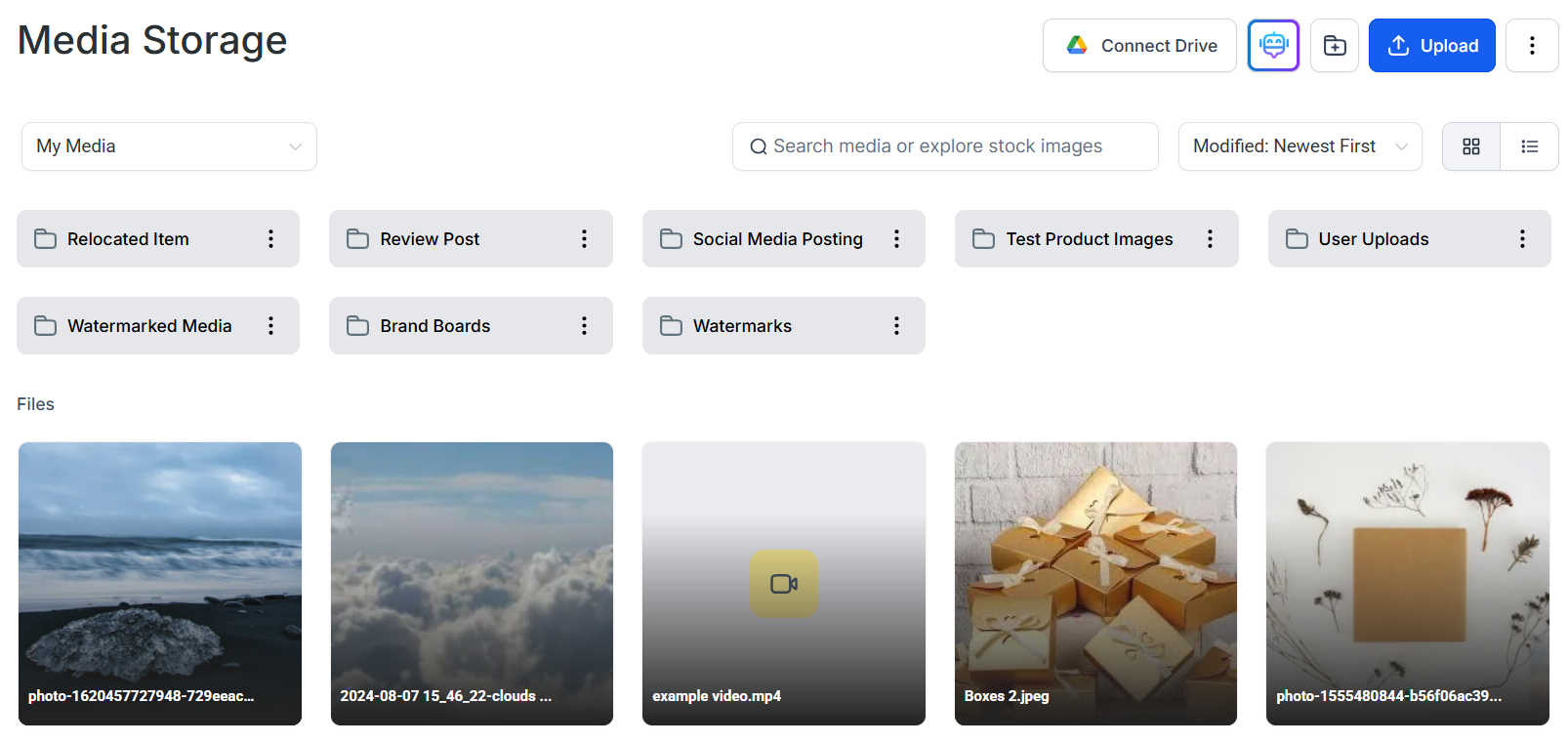
Google Drive
Manage your Google Drive integration to effortlessly sync files, optimize media organization, and centralize your file storage for greater efficiency.
Creating an Image Using AI
Easily create images within the system by selecting this button and filling out the details. Images created using this feature will incur a fee.
Creating Folders
The New Folder button gives you a convenient way to organize your content.
By clicking the New Folder button, a window containing a field where you can enter the name of your new folder will appear. You can give this folder a name correlating to its content, providing an easy way to help manage your Media Library.
Uploading Files
The Upload button allows you to select multimedia files from your computer and upload them to the system. Upon clicking the button, a window will open, granting access to your computer’s storage. To upload files, simply locate them in the window and select them individually. Once the upload process is complete, the files will appear in your media library for easy access.
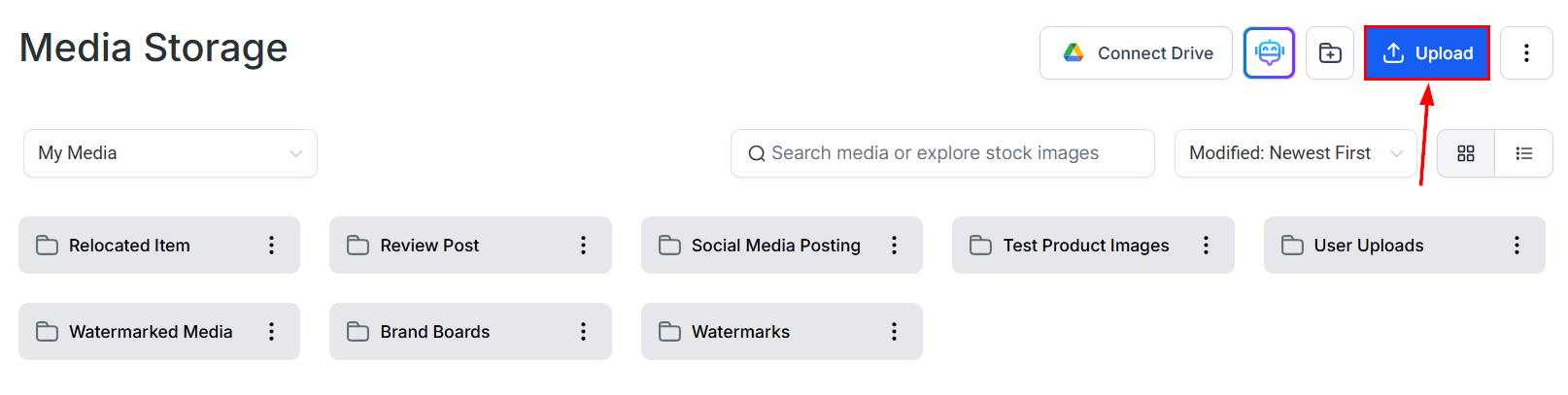
Media Storage Actions
Click the three dots to access deleted items and view your storage usage. Regularly assessing your storage usage can help you efficiently organize and eliminate unnecessary files, ensuring your media library remains organized and easily accessible.
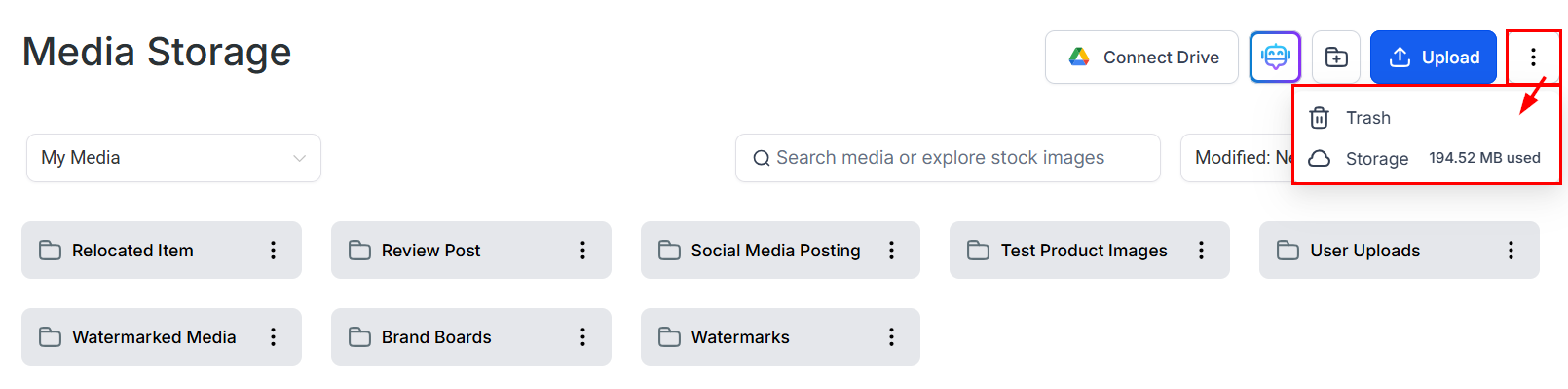
Filters
Filter the images displayed by the file locations. Items you have uploaded will be stored in the “My Media” section. Explore backgrounds and content from Unsplash or Pixabay by selecting the corresponding option.
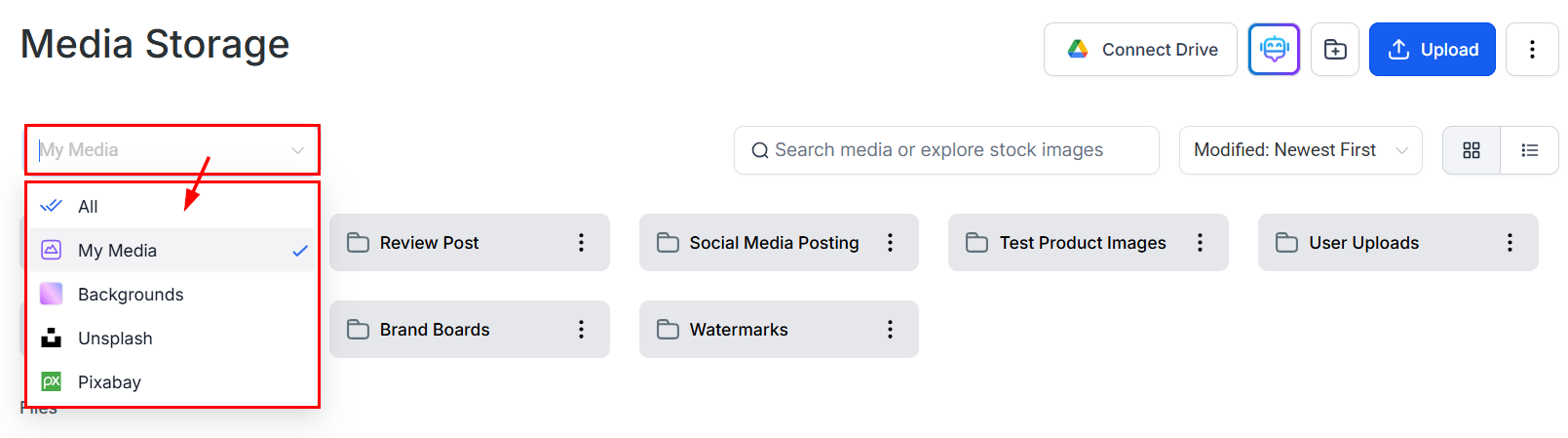
Search
With the handy search tab, you can quickly find any media file in your CRM with ease. Locate images, audio clips, or video files with just a few clicks – it's never been easier to organize and store all of your CRM's materials!
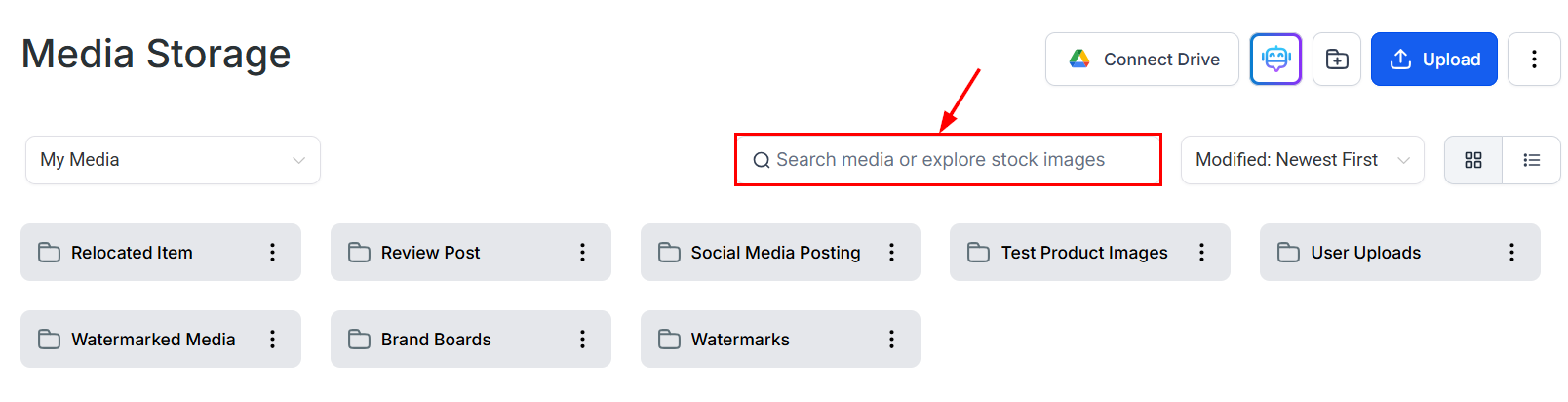
Sorting
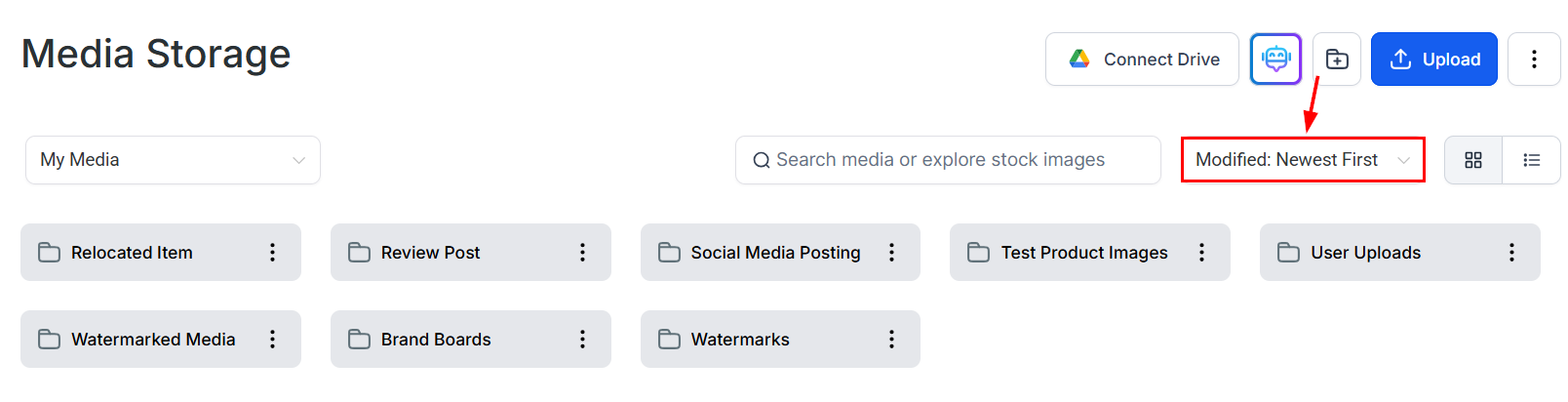
With the dropdown option, you can rearrange how your content appears in your library. Select whether items are sorted based on their Name, Size, or based on when they were Last Modified.
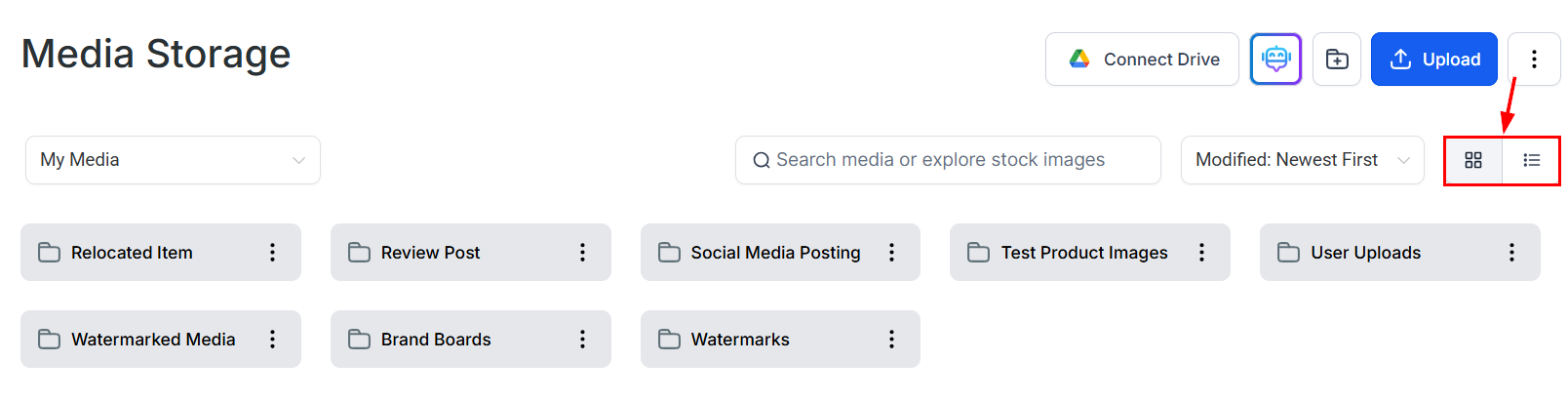
Display
Choose to display your content in a grid or list view for better media organization.
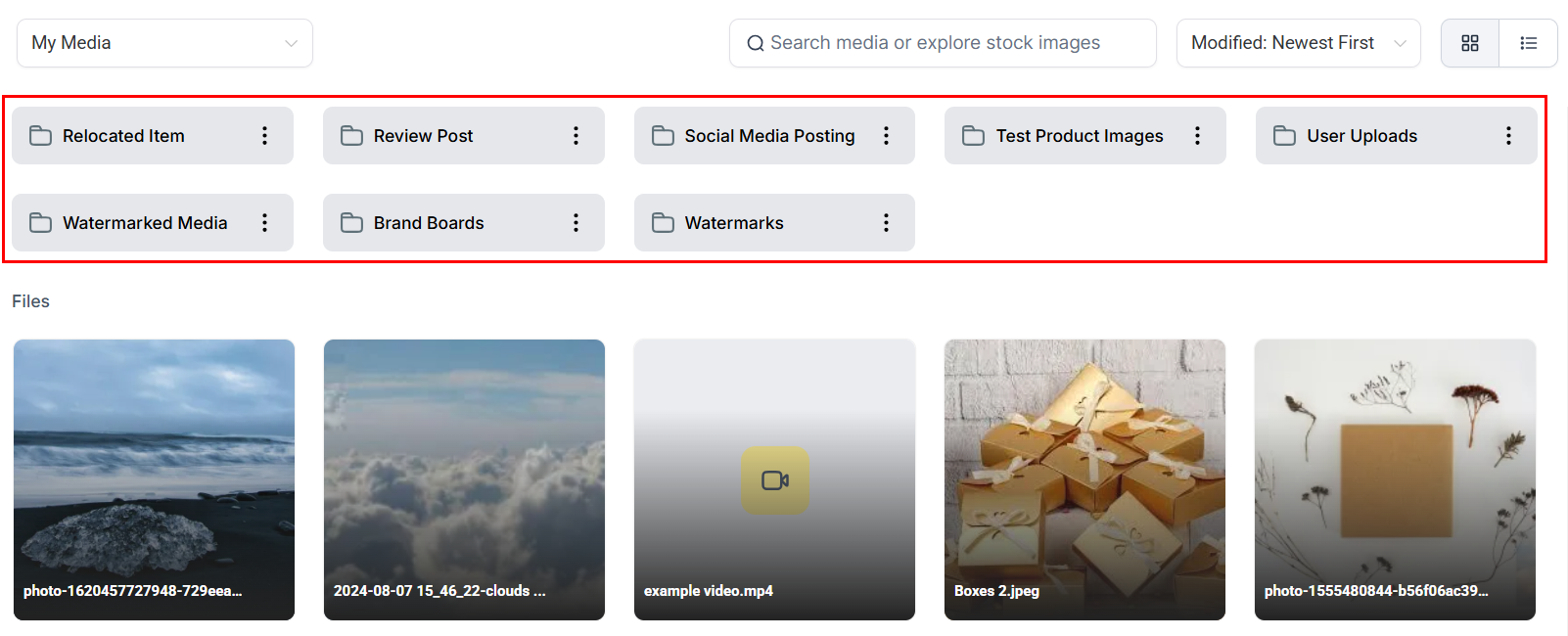
Folders
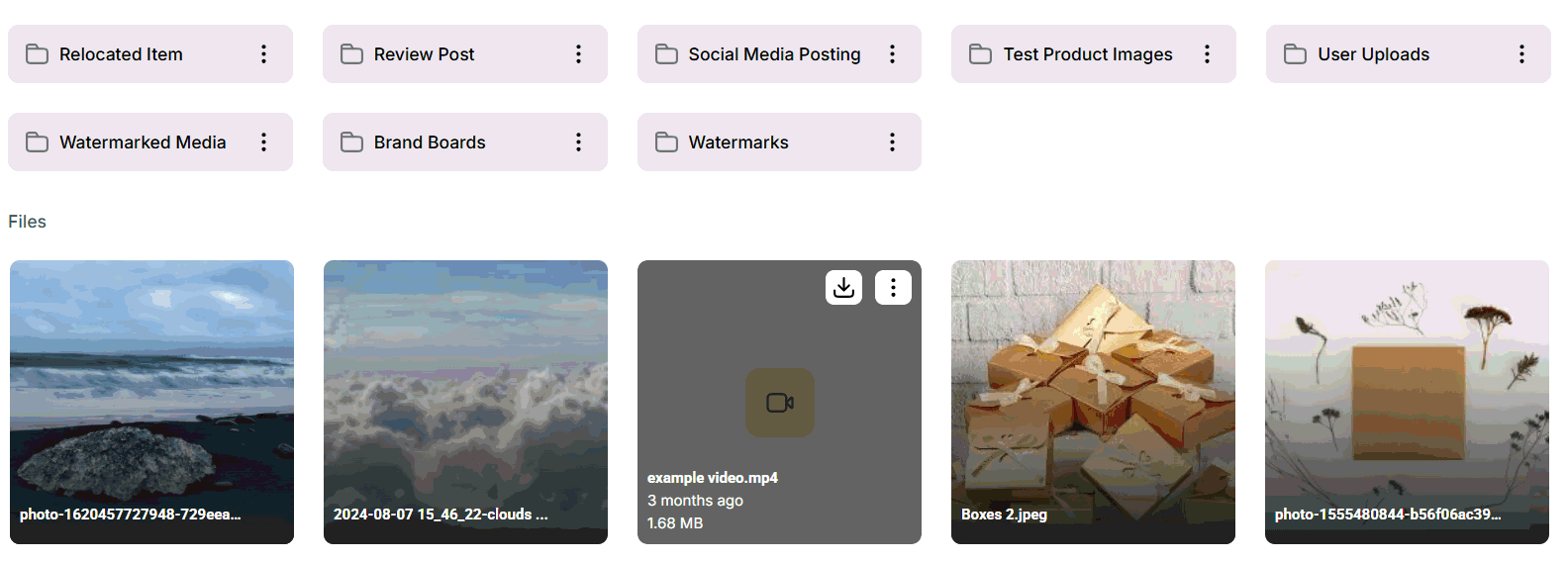
Looking at your media library, you will see a list of folders you have created at the top.
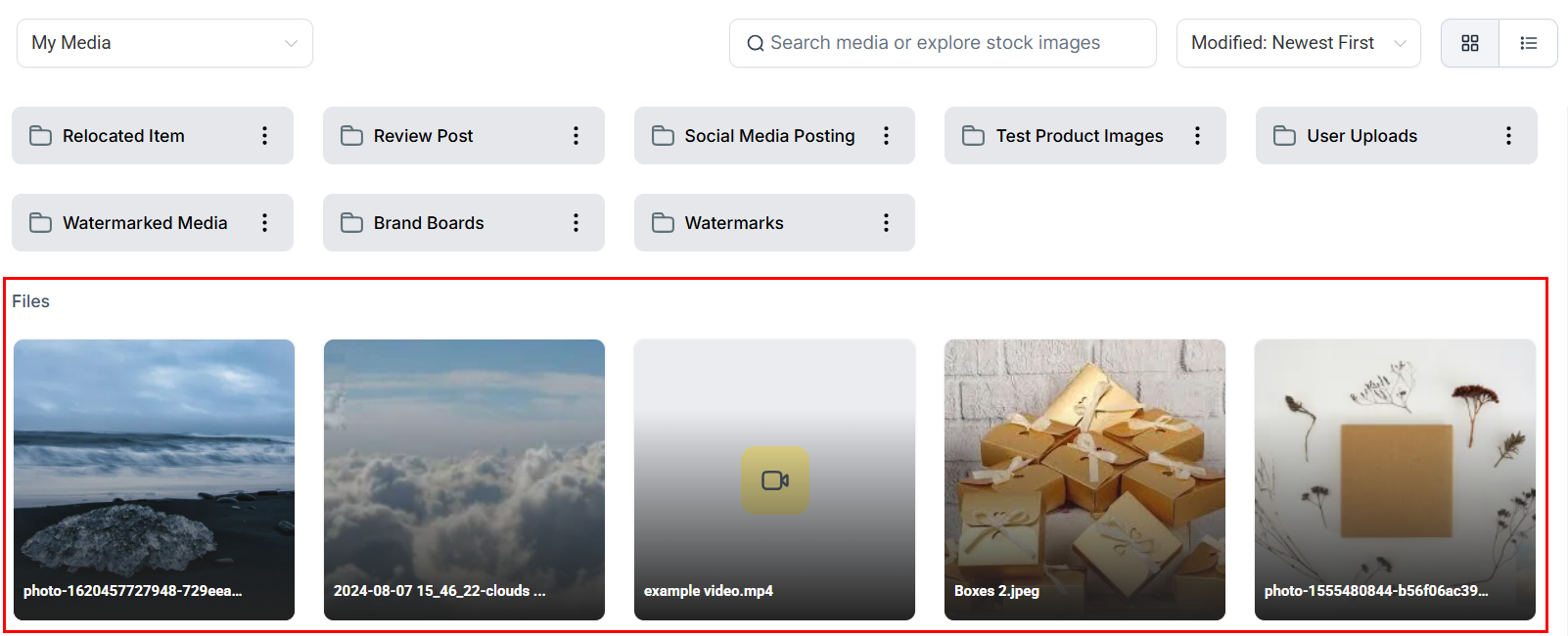
Files
Files that are not included in folders will be seen below the folders
Export
To download any file to your computer, hover over it and click the arrow pointing down.
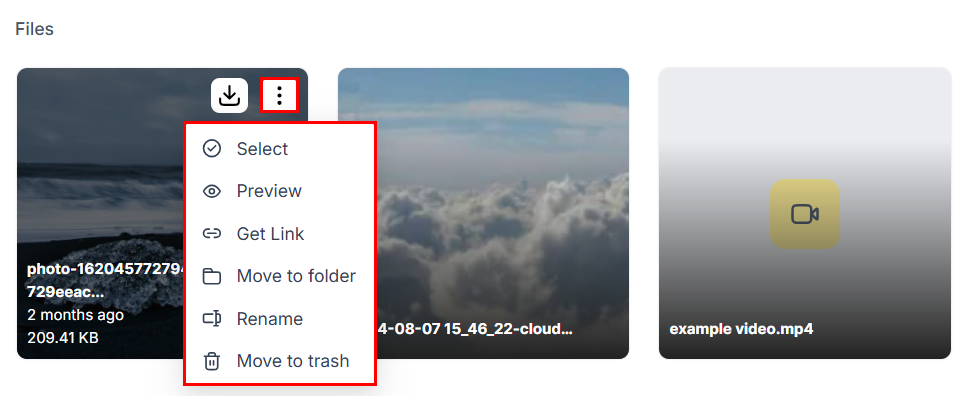
Actions Menu
Click the three-dot icon to access the file options which allows you to select the media file, access image previews, get the media Link, move it to a folder, and rename or delete the file.
File Preview
To preview any file in the system, simply click on its image. The preview will display key details, including the upload date, file size, and specifications, along with options to download the file or copy its link.
Multi-Select Media
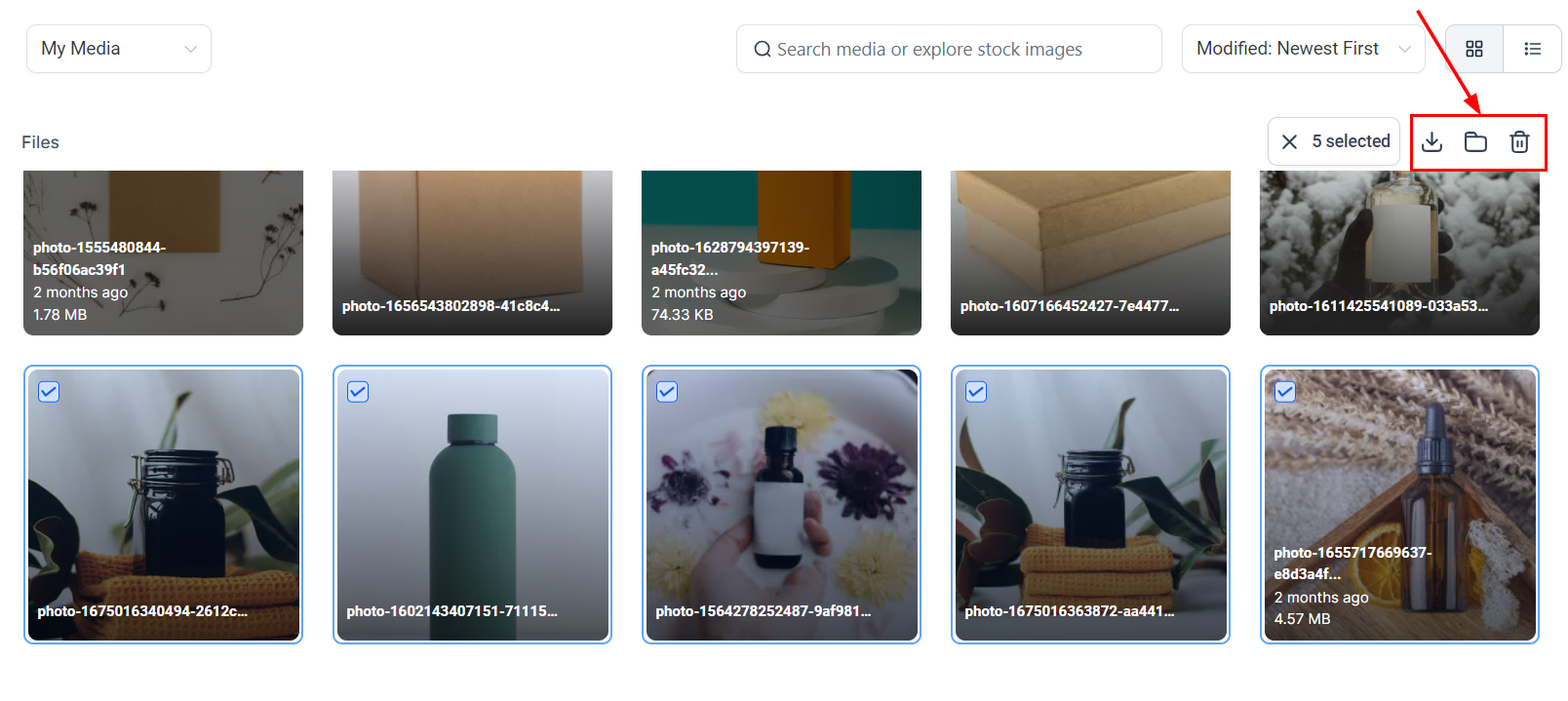
Select multiple files simultaneously from the action dropdown or by clicking and dragging your mouse across the desired items. This functionality enhances efficiency when managing large volumes of files.
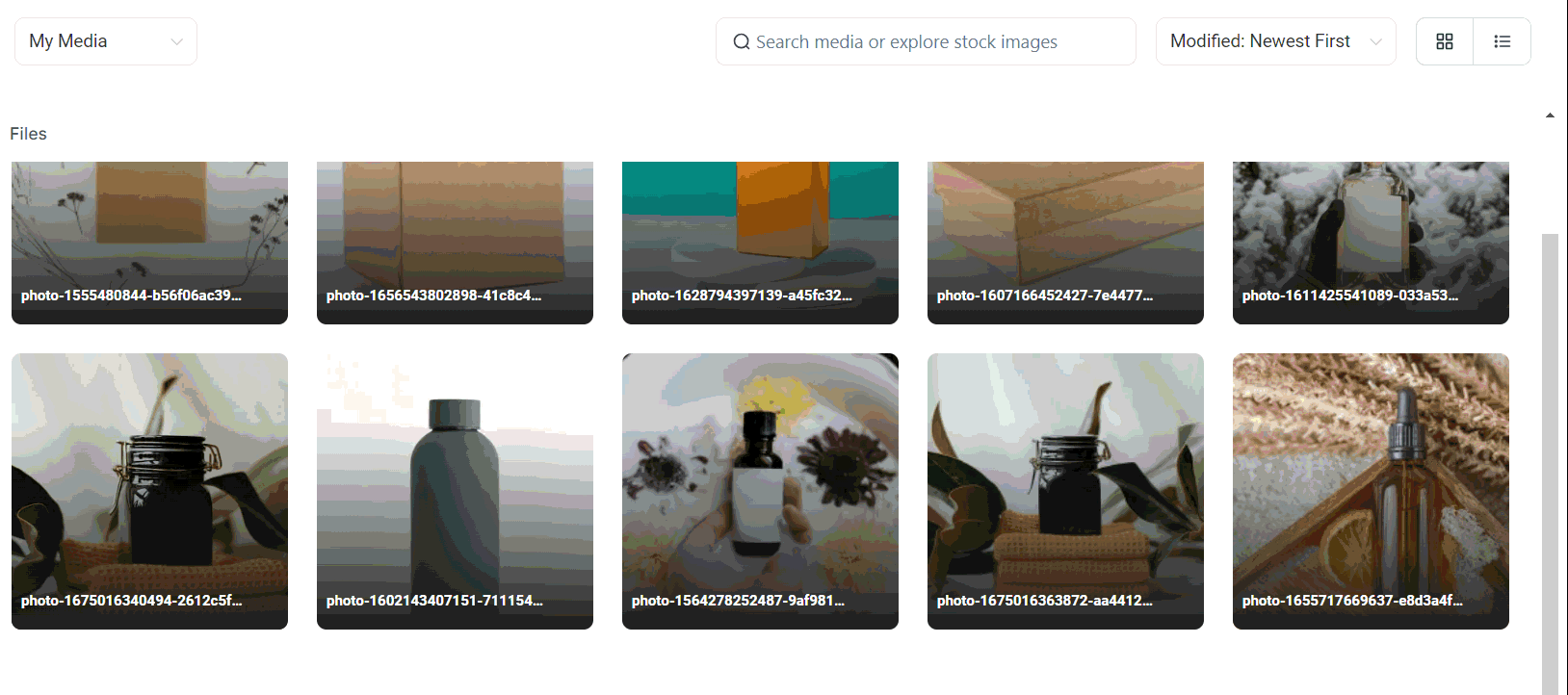
Once files are selected, you can efficiently move them to a new folder, download them, or delete the selected files in bulk. This capability streamlines workflows by saving time on repetitive tasks.
? Notes
- You can select and download up to 100 files at a time. If a file size exceeds 2 GB, it will be skipped in multi-download and has to be downloaded individually.
- When in multi-select mode, the “Rename”, “Get Link”, and “Preview” options will be disabled for selected files to maintain simplicity during bulk actions.
Was this article helpful?
That’s Great!
Thank you for your feedback
Sorry! We couldn't be helpful
Thank you for your feedback
Feedback sent
We appreciate your effort and will try to fix the article